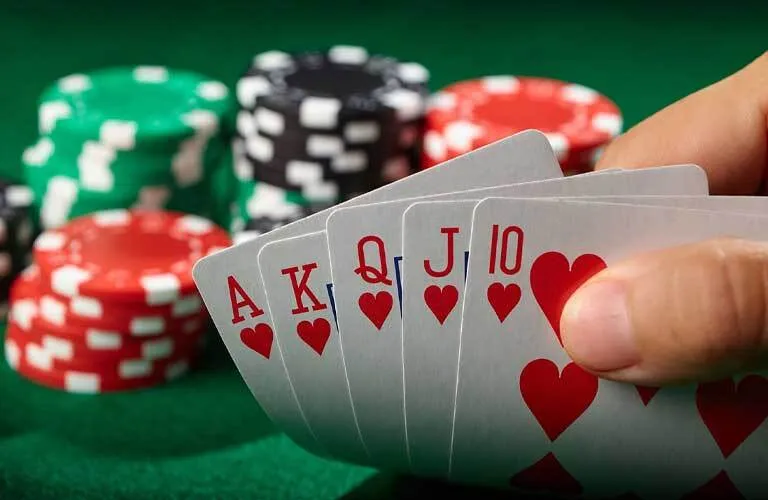
Understanding Why Poker Remains One of the Most Skill Driven Games
Poker has held its place as one of the most respected strategy games in the world due to its intricate mix of psychology, probability, and decision making under pressure. Whether played casually or in high stakes environments, Poker challenges players to analyze opponents, manage risk, and adapt to constantly shifting conditions. Within the first or second experience at the table, most people realize that Poker is far more than a simple card game. It is a structured contest built on discipline, intuition, and strategic foresight. The keyword Poker fits naturally into this context because it represents not only the cards but the mindset and methodology required to become a strong player.
The Foundation of Modern Poker Gameplay
Poker is built upon a core structure that includes betting rounds, hand rankings, positional considerations, and psychological exchanges. These elements combine into a dynamic system in which no two games unfold the same way.
The Role of Hand Rankings in Decision Making
A player’s hand serves as the starting point for every strategic decision. Hand rankings determine which combinations hold greater value, but optimal play requires evaluating how the strength of a hand interacts with board texture, opponent tendencies, and betting patterns.
Key hand categories include:
- Premium starting hands such as high pairs or strong aces
- Speculative hands like suited connectors
- Drawing hands involving straights or flushes
- Marginal hands that require caution and strong positional awareness
Understanding these categories helps players evaluate risk across different stages of a hand.
Betting Structures and Their Impact
Poker uses various betting formats that influence gameplay style:
- No Limit structures allow players to wager any amount of chips at any time
- Pot Limit structures restrict raises to the size of the pot
- Fixed Limit structures use predetermined betting increments
Each structure introduces unique decision making frameworks. No Limit requires emotional control and careful sizing. Pot Limit rewards strategic pot management. Fixed Limit emphasizes mathematical efficiency.
The Significance of Position
Position is one of the most powerful elements in Poker strategy. Players who act later in a round see more information before making decisions. This advantage allows late position players to:
- Control pot size
- Detect weaknesses in opponents
- Apply pressure with greater accuracy
- Play a wider range of hands profitably
Successful players consistently exploit positional edges to win more pots with fewer showdowns.
Probability and Mathematical Frameworks in Poker
While Poker is influenced by human behavior, probability forms the backbone of strong decision making. Understanding the mathematical foundation helps players evaluate long term expectations and avoid costly mistakes.
Pot Odds and Implied Odds
Pot odds compare the cost of a call to the potential reward. If the probability of completing a hand is higher than the price required to continue, the call is mathematically profitable.
Implied odds consider future bets that can be won after hitting a strong hand. These concepts guide decisions involving drawing hands such as flushes and straights.
Expected Value and Long Term Profitability
Expected Value (EV) evaluates whether a decision will be profitable over time. Players aim to consistently take actions with positive EV while avoiding negative EV situations.
Examples of EV driven decisions:
- Folding weak hands early to avoid unnecessary losses
- Calling with favorable odds despite short term risk
- Raising when weaker players will call with inferior holdings
Understanding Variance
Variance reflects the natural swings of Poker. Even excellent players lose sometimes due to probability fluctuations. Emotional resilience helps maintain discipline through downswings, while mathematical understanding reinforces confidence in long term results.
Psychological Strategy and Player Profiling
Poker is unique because it blends analytical thinking with psychological observation. Reading opponents and managing personal emotional control often makes the difference between a good player and a great one.
Recognizing Opponent Tendencies
Players tend to fall into certain behavioral patterns:
- Tight players who enter few pots
- Loose players who call frequently
- Aggressive players who bet and raise often
- Passive players who rely on checking and calling
Identifying these tendencies allows players to tailor strategies for maximum effectiveness.
Bluffing and Semi Bluffing
Bluffing is not simply about misleading opponents. It requires understanding:
- How opponents perceive your betting patterns
- Board textures that strengthen or weaken your story
- Likely calling ranges from other players
Semi bluffing involves drawing hands that can still improve if called, combining psychological pressure with mathematical potential.
Emotional Management and Table Presence
Control of emotional responses is essential. Successful players maintain composure even when facing:
- Rapid losses
- Unexpected outcomes
- Opponent pressure
- Extended sessions without strong hands
Strong table presence influences how opponents respond, creating opportunities for strategic advantages.
Advanced Poker Concepts and High Level Techniques
Experienced players build upon foundational skills by incorporating advanced strategies that maximize profitability and reduce predictability.
Range Based Thinking
Instead of placing opponents on single hands, advanced players consider the range of hands an opponent could reasonably hold based on:
- Position
- Betting patterns
- Timing
- Board development
Range analysis allows more accurate decision making across all streets.
Balancing Strategies to Stay Unpredictable
If opponents can read patterns too easily, even strong hands lose value. Balancing strategies involves:
- Mixing bluffs with strong hands
- Varying bet sizes
- Occasionally breaking routine tendencies
- Maintaining a flexible decision making style
This prevents opponents from exploiting predictable patterns.
Exploitative vs. Game Theory Optimal Play
Two predominant styles exist at high levels:
- Exploitative play targets specific weaknesses in opponents
- Game Theory Optimal (GTO) play aims for unexploitable decisions based on balanced ranges
Elite players shift between these approaches depending on conditions at the table.
Tournament Strategy vs. Cash Game Strategy
Poker offers multiple formats, each requiring a unique approach. Knowing how strategies differ helps players adapt efficiently.
Tournament Dynamics
Tournaments involve rising blinds, changing stack sizes, and survival based decision making.
Key factors include:
- Preserving chips during early stages
- Applying pressure when stacks shrink relative to blinds
- Adjusting ranges as payout structures approach
- Exploiting bubble play where players become overly cautious
Tournament play rewards patience, aggression at key moments, and deep situational awareness.
Cash Game Structure
Cash games provide deeper stacks and consistent blinds, allowing for:
- More creative post flop play
- Larger implied odds opportunities
- Extended bluffing strategies
- Long term profitability through steady decision making
Cash games require patience, strong fundamentals, and emotional discipline.
Money Management and Long Term Sustainability
Bankroll management is critical for anyone seeking long term success in Poker. Even highly skilled players face periods of negative variance.
Setting Realistic Limits
Players should maintain a bankroll that supports the stakes they play. A typical guideline is holding enough buy ins to withstand downswings without financial strain.
Avoiding Tilt
Tilt refers to emotional decision making after frustration or loss. Managing tilt requires:
- Recognizing emotional triggers
- Taking breaks when needed
- Maintaining a strategic mindset
Tracking Performance
Regular review of wins, losses, and strategic decisions helps refine long term performance. Many players track:
- Hand histories
- Bet sizing patterns
- Opponent tendencies
- Mistakes needing improvement
The Cultural and Social Role of Poker
Poker extends beyond mathematics and strategy into cultural significance. It reflects personal discipline, risk assessment, and human interaction.
Competitive Environments
Local games, private clubs, and large tournaments create diverse competitive communities. Many players develop lifelong friendships through shared experiences at the table.
Media Influence
Televised events, streaming platforms, and online series have increased visibility, allowing people to study gameplay and observe professional strategies.
Personal Development
Poker teaches skills valuable beyond the table, such as:
- Decision making under pressure
- Emotional control
- Analytical reasoning
- Long term planning
These skills influence career performance, financial management, and interpersonal communication.
Frequently Asked Questions
How much of Poker is skill versus luck?
Skill influences long term outcomes, while luck affects short term results. Over time, players who consistently make mathematically sound decisions outperform those who rely heavily on chance.
Are bluffing strategies essential for success?
Bluffing is important but must be used selectively. Effective bluffing depends on reading opponents, understanding board texture, and maintaining a balanced image throughout the session.
How do beginners improve quickly?
Studying hand rankings, understanding position, practicing bankroll management, and playing consistently help new players improve. Reviewing hands after each session accelerates learning.
What matters most in tournament play?
Stack size, rising blinds, and stage based decision making have enormous influence. Survival is often more important than individual hand results, especially near payout milestones.
Do online and in person Poker require different strategies?
Online play tends to be faster and more mathematical, while in person play involves more physical observation and psychological reading. Strong players adapt to both environments using similar core principles.
How can players handle long downswings?
Understanding variance, maintaining proper bankroll size, reviewing strategy, and staying emotionally grounded help players navigate difficult periods without losing confidence.
If you want, I can also create deep dive articles on advanced Poker math, cash game analysis, tournament ICM strategy, or psychological mastery at the table.
