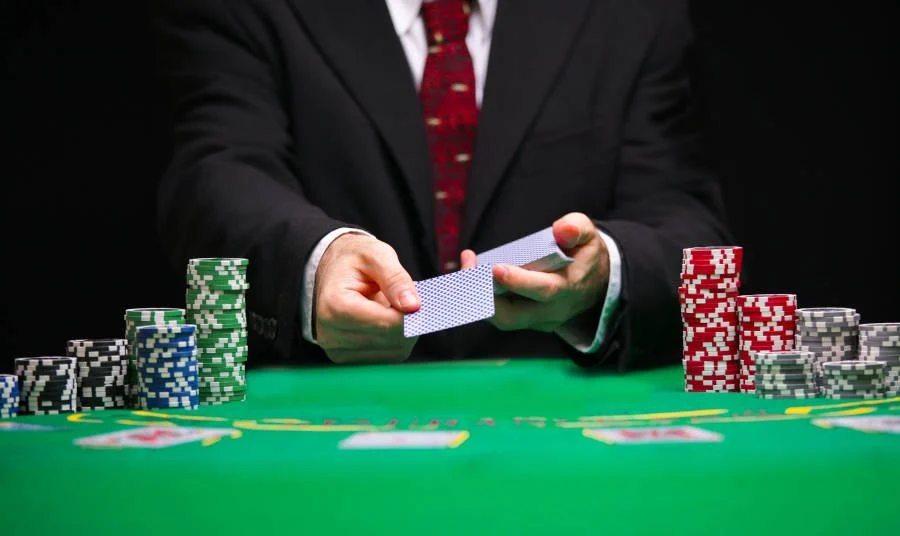
Experience at the blackjack table often creates a false sense of security. Players who have logged hundreds of hours know the fundamental rules, understand the table flow, and can rattle off standard decisions without glancing at a cheat sheet. Yet, spending years in the casino environment does not automatically translate to optimal play. Many seasoned players plateau at a level where their habits are good enough to keep them from looking foolish, but flawed enough to bleed chips steadily over the long haul.
The difference between a break-even session and a profitable run frequently comes down to a handful of micro-decisions. When experienced players make mistakes, they rarely make the glaring errors of novices, such as splitting tens against a five or hitting a hard nineteen. Instead, their errors are subtle. They stem from cognitive biases, emotional fatigue, counter-intuitive mathematics, and an overreliance on gut instinct when the correct play feels uncomfortable.
Recognizing and eliminating these blind spots is what separates casual veterans from players who genuinely respect the mathematics of the game.
Mismanaging Soft Hands Under Pressure
Soft hands are among the most frequently mishandled positions for intermediate and advanced players. Because a soft hand cannot bust on the immediate draw, players often underestimate the aggressive posture required to extract value from it.
The Soft 18 Compromise
The classic example is soft 18 (Ace-7). Countless experienced players treat an 18 as a finished hand that should be protected at all costs. Standing on soft 18 against a dealer showing a nine, ten, or Ace feels sensible because an 18 looks respectable. In reality, standing in these spots guarantees a negative expected value.
Against strong dealer upcards, a dealer holding a nine or ten will make a better total far more often than they bust. When you hold soft 18, you are an underdog. Standing surrenders equity, whereas hitting gives you a chance to improve to 19, 20, or 21 without risking an immediate bust on the first hit. Furthermore, against a dealer two through six, failing to double down on soft 18 leaves substantial profit on the table. Double-down opportunities against weak upcards are the primary mechanism by which players offset the house edge. Treating soft 18 defensively when the math calls for offense is a persistent leak.
Hesitation on Lower Soft Doubles
Another common lapse occurs with soft 13 through soft 17. Basic strategy dictates doubling down on these hands against specific dealer upcards, particularly against fours, fives, and sixes. However, seasoned players frequently revert to simple hits because their total seems too weak to justify putting more money at risk.
Doubling a soft 14 against a dealer five does not feel intuitive because drawing a face card leaves you with a four. Yet mathematically, you are capitalizing on the dealer’s high probability of busting while retaining two chances to construct a workable total. Passing on these doubles robs you of positive expected value spots that are vital to long-term survival at the felt.
Surrendering Equity by Ignoring Late Surrender
Late surrender is one of the most favorable rules available to a player, effectively shaving roughly 0.08% off the house advantage when utilized properly. Despite this, it remains one of the least utilized options among experienced players.
Many regular visitors to the casino view surrender as a psychological defeat or an act of cowardice. Others simply forget it exists because it requires an explicit verbal declaration or hand signal that is rarely used by the rest of the table.
Failing to surrender hard 16 against a dealer nine, ten, or Ace (or hard 15 against a dealer ten) is mathematically irresponsible. On a hand where your expected loss exceeds 50% by playing it out through hitting or standing, forfeiting half your wager is the mathematically superior choice. Surrendering preserves capital for situations where the deck works in your favor. Treating surrender as an embarrassing fallback rather than a precision defensive tool is a mark of ego over discipline.
Splitting Errors Driven by Intuition Rather Than Math
Splitting pairs is another area where experienced players let emotional intuition override proven statistical models. While most know never to split fives or tens, other pairing scenarios create consistent confusion.
Hesitating on Eights Against Strong Upcards
Every player knows the golden rule: always split Aces and eights. Yet when faced with a dealer showing a ten or an Ace, experienced players frequently hesitate. The thought of committing a second full betting unit into what appears to be a disastrous situation prompts many players to simply hit their 16 instead.
This is a failure of perspective. A hard 16 is the worst starting hand in blackjack. Playing it as a single hand results in a devastating loss rate. By splitting your eights against a dealer ten, you break up a terrible total into two separate starting hands of eight, giving you a reasonable chance to hit toward 18 or 19. While you may still lose one or both hands on occasion, the long-term expected loss of splitting eights is substantially lower than the loss incurred by hitting or standing. You split not to win, but to lose significantly less money over time.
Misplaying Pair of Nines
Pairs of nines present a different problem. Players often remember that they should split against weak upcards, but they freeze when facing a seven, eight, or nine.
When holding a pair of nines against a dealer seven, the correct mathematical play is to stand, not split. The dealer is showing a seven and has an elevated probability of finishing with 17, making your static 18 a winning hand. However, against an eight or a nine, you must split. Standing with an 18 against a dealer nine is a losing posture because the dealer’s most likely total is 19. Splitting gives you two shots at reaching 19 or better. Many veterans get this backward or simply choose to stand across the board to avoid overthinking the hand.
Falling for the Even Money Illusion
One of the most persistent traps in casino gaming is the offer of “even money” when a player is dealt a blackjack and the dealer shows an Ace. Pit bosses and dealers present this option as a risk-free guarantee: take an immediate 1:1 payout instead of risking a push if the dealer also reveals a blackjack.
Experienced players who would never touch standard insurance often take even money without realizing that taking even money is mathematically identical to buying insurance.
When you buy insurance on a blackjack, you are wagering half your bet that the dealer has a ten-value card in the hole. If you decline even money, you will push roughly 30.8% of the time (in a standard multi-deck shoe), but you will get paid 3:2 on the remaining 69.2% of occurrences.
The math is unambiguous: declining even money yields an average return of roughly 1.04 units per hand, while taking even money locks you into exactly 1.00 unit. Over thousands of hands, surrendering that 4% difference on natural blackjacks drains a massive amount of expected value from your game. True discipline means accepting the occasional push in exchange for the higher long-term expected payout.
Overlooking Table Conditions and Rule Variations
A critical mistake made by players with years of experience is treating all blackjack tables as functionally identical. Assuming that basic strategy works the same way regardless of venue conditions leads to continuous leaks.
The 6:5 Payout Trap
The proliferation of 6:5 payouts on natural blackjacks is the single most predatory development in modern table games. At a 6:5 table, a natural blackjack pays $12 on a $10 bet, compared to the standard $15 paid at a 3:2 table.
This seemingly minor change increases the house edge by approximately 1.4%, single-handedly wiping out the advantage gained from playing perfect basic strategy. Seasoned players who sit at these tables out of convenience, lower minimums, or better table atmosphere are fundamentally playing a game with odds closer to roulette than real blackjack. No amount of tactical skill can overcome a 6:5 rule structure.
S17 Versus H17 Rule Drift
Basic strategy charts are not universal; they adjust depending on whether the dealer is required to stand on all 17s (S17) or hit on soft 17 (H17). When the dealer hits soft 17, the house edge increases by roughly 0.2%, and several key player decisions change:
-
You should double down on an 11 against a dealer Ace in H17 games, whereas you merely hit in S17 games.
-
You should double down on soft 19 (Ace-8) against a dealer six in H17 conditions.
-
You should surrender a pair of eights against an Ace in H17 multi-deck shoes rather than split.
Failing to calibrate your game to the specific felt rules posted on the table is an easy way to give away fractions of a percent on every shoe.
Blaming the Flow of the Cards and Table Position
Perhaps the most common psychological flaw among veteran players is a belief in the “flow of the cards.” This superstition asserts that poor decisions made by players at third base (the seat directly to the dealer’s right) ruin the table and cost everyone money.
From a mathematical standpoint, a player making an incorrect play at third base—such as hitting a 12 against a dealer six—has an entirely neutral effect on the rest of the table over time. Because the order of cards remaining in the shoe is random, their erroneous hit is just as likely to take a bust card away from the dealer as it is to feed the dealer a winning card.
The danger of this belief is not just social friction at the table; it causes experienced players to alter their own sound strategy. They begin deviating from basic strategy to “fix” the deck order or compensate for an erratic player. The moment you alter mathematically sound choices based on shoe distribution or another player’s actions, you sacrifice your own edge.
Cognitive Fatigue and Session Management
Blackjack requires continuous mental calculations and absolute emotional discipline. The longer you sit at a table, the more your analytical faculties degrade.
Experienced players frequently suffer from overconfidence regarding their stamina. After four hours of continuous play, especially under the influence of complimentary beverages and casino noise, reaction times slow and cognitive shortcuts take over. You start looking for reasons to stand on tough hands to avoid busting, or you begin pressing your bets aggressively to recover from a downswing without any statistical justification.
The most disciplined tactical knowledge is worthless if your brain is too fatigued to execute it. Setting strict session limits, scheduling non-negotiable walk-away intervals, and recognizing the onset of mental exhaustion are just as essential as knowing when to split your nines.
Eliminating these recurring errors does not require memorizing complex card-counting systems. It simply demands that you abandon outdated superstitions, verify table rules before buying in, and trust the mathematics over your instincts, regardless of how counter-intuitive the right move feels.