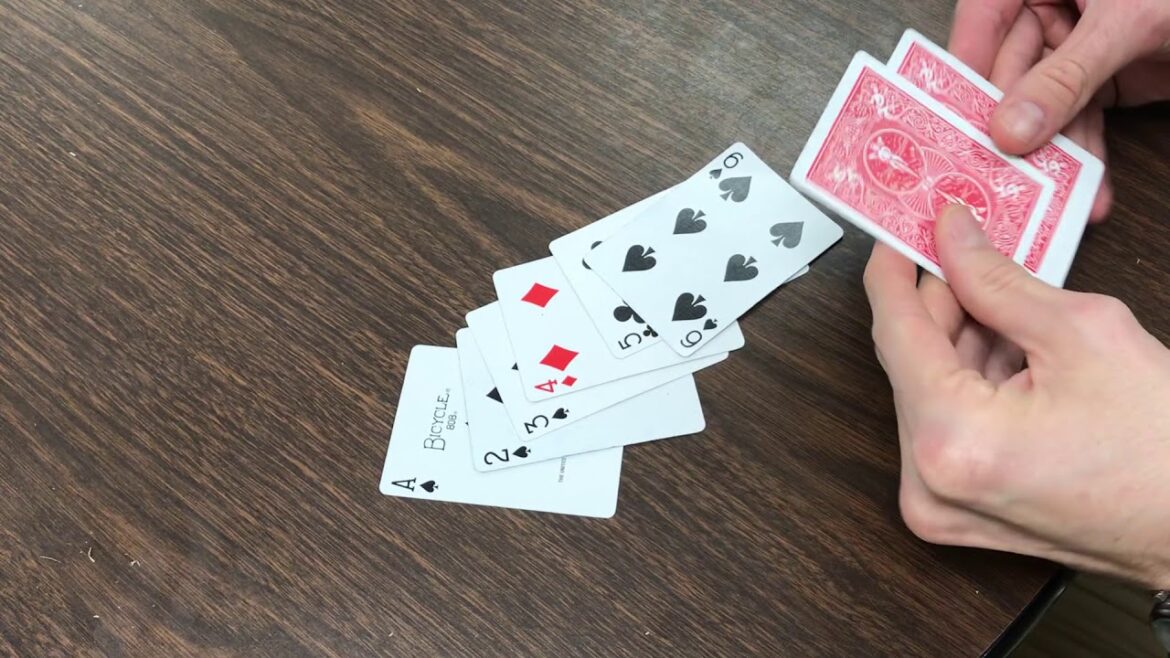
Pick up a deck of fifty-two playing cards, and you hold one of the most versatile physical tools ever invented. In the hands of a novice, it offers harmless living-room entertainment. In the hands of an expert, it becomes an instrument of absolute control.
Yet the true nature of that control depends entirely on context and intent. A turn of the wrist that produces gasps of wonder in a theater can, in a smoke-filled backroom or private poker game, trigger an accusation of larceny. Both the card magician and the card mechanic—the advantage player who manipulates cards for illicit profit—rely on the exact same anatomical precision, biomechanics, and physics. They study the same angles, practice the same finger conditioning for thousands of hours, and master the same properties of paper and friction.
Despite sharing an identical physical vocabulary, the illusionist and the cheat walk paths that diverge sharply in psychology, execution, and ethics. Understanding that divide reveals just how fragile the boundary is between harmless entertainment and high-stakes deception.
The Shared Roots of Artifice and Illusion
The modern lineage of card handling was not forged in performing arts academies. It was hammered out in dusty saloons, on Mississippi riverboats, and across underground gambling dens where an undetected sleight meant survival and exposure meant violence.
For centuries, gamblers and conjurors existed in an informal, symbiotic relationship. Techniques developed to steal pots at card tables were continually absorbed by street performers looking to baffle crowds, while magicians occasionally supplemented their incomes by applying their craft to real-world wagering.
The seminal text that codified modern sleight of hand, published in 1902 under the pseudonym S.W. Erdnase, divided its pages cleanly into two sections: “Card Table Artifice” and “Legerdemain.” The author made no apologies for the connection. To Erdnase, understanding the methods of the card sharp was the only true prerequisite for mastering card conjuring. Both disciplines demanded total mastery over the physical deck, but each applied that mastery to an entirely different social contract.
The Anatomy of Shared Mechanics
When stripped of their surrounding drama, the foundational maneuvers of card magic and card cheating are mechanically indistinguishable. Both practitioners must be able to control which cards appear, when they appear, and who receives them, all while making the deck look completely undisturbed.
The Art of the False Deal
The most famous demonstration of advanced card manipulation is the false deal. Under normal play, the dealer slides the top card of the deck off the packet and delivers it to a player. A false deal mimics that motion perfectly while delivering a different card altogether.
-
The Second Deal: The dealer retains the top card—typically an Ace or another power card previously controlled to the top—while smoothly pulling the card directly beneath it. A magician uses this to prevent an audience member’s chosen card from being dealt. A poker cheat uses it to withhold a winning card until dealing to their own hand or a conspirator.
-
The Bottom Deal: The dealer dispenses the card from the very bottom of the deck while creating the auditory and visual impression that it originated from the top. In magic, it enables impossible reveals; in blackjack or poker, it allows a player to store designated cards at the base of the deck and deploy them at will.
-
The Center Deal: Considered the pinnacle of manual dexterity, the center deal involves extracting cards from the middle of a squared deck without displacing the surrounding stack. While rarely required in modern gaming due to its immense difficulty, it remains a legendary benchmark among sleight-of-hand purists.
False Shuffles and Preserved Sequences
Shuffling is universally accepted as the great equalizer in card games. It represents the moment where human control yields to mathematical randomness. Both magicians and card mechanics exploit this assumption by executing shuffles that look chaotic but leave the deck’s order entirely intact.
A false riffle shuffle might look like two halves of the deck interweaving cleanly on the table, yet the fingers control the drop so that specific sequences, known as slugs, remain untouched. Similarly, a false cut splits the deck into multiple packets, reassembles them with convincing finality, and yet leaves the original top card exactly where it started.
For the magician, this allows an entire act to unfold from a pre-arranged sequence. For the card mechanic, it ensures that a “stacked” deck—where winning hands have been methodically pre-sorted during the gathering of discards—survives the ritual of the shuffle unharmed.
Palming, Capping, and the Steal
Palming involves concealing one or more cards within the natural contours of the hand without bending, flashing, or stiffening the fingers.
In a theatrical setting, palming is used to make cards vanish into thin air, only to reappear inside an impossible location like an envelope or a spectator’s pocket. In a competitive card game, palming is used to add cards to a hand (capping) or temporarily remove cards from play to switch them into a subsequent round. The physical grip—whether a classic palm, a gambler’s flat palm, or a cop—is mechanically identical. What changes is the operational window in which the card must remain hidden.
The Divergence in Psychology and Misdirection
While the manual techniques are mirrored, the mental architecture surrounding the moves could not be more different. Magic relies on theatrical manipulation of the spectator’s conscious awareness, whereas card gaming demands absolute uniformity that never engages awareness at all.
The Magician’s Theatre of Attention
A magician thrives on active misdirection. They do not hide their hands; in fact, they frequently draw direct visual attention toward them. Magic is built around narrative framing, vocal cadence, dramatic pauses, and body language.
When an illusionist executes a difficult pass (an invisible transposition of two halves of the deck), they often do so under the cover of a large, sweeping gesture or a direct question posed to a spectator. The human brain naturally tracks large movements over small movements, and eyes instinctively follow an upward gaze or a verbal prompt. The magician orchestrates an intentional lapse in attention. They want the audience to look, just not at the exact split-second the physical compromise occurs.
Furthermore, the magician is working toward an impossible climax. The entire purpose of the performance is for the audience to recognize that an extraordinary, rule-breaking event has taken place. The audience knows they are being deceived and actively celebrates the skill that fooled them.
The Mechanic’s Rule of Uniformity
A card mechanic operating in a competitive game has no script, no stage lighting, and no luxury of dramatic gestures. In a private poker room, drawing sudden attention to yourself is disastrous.
The cheat operates under a strict principle called the uniformity of action. Every single move made at the table must look identical to every innocent move. A second deal cannot possess an extra flourish; it must match the tempo, sound, thumb stroke, and wrist angle of a standard top deal. A false shuffle must sound identical to an honest shuffle, right down to the audible snap of the cards squaring against the felt.
More importantly, the mechanic relies on passive obscurity rather than active misdirection. If a magician performs well, the audience proclaims, “I have no idea how you did that!” If a card mechanic performs well, the table proclaims, “You sure have been getting lucky tonight.”
The ultimate goal of the card cheat is for no one to ever suspect that anything out of the ordinary occurred. The moment an opponent at the table feels that a hand was miraculous, suspicion awakens, and the mechanic’s edge evaporates.
The Evolution of Table Defense and Casino Countermeasures
Because sleight of hand developed primarily as a predatory tool in gambling, the gaming industry spent over a century engineering countermeasures to neutralize manual manipulation. Modern casino protocols are essentially an architectural response to the history of sleight of hand.
Consider the simple cut card. In modern casino blackjack or baccarat, the dealer hands a solid plastic card to a player to cut the deck, which is then placed at the bottom of the stack. That single piece of plastic instantly neutralized the bottom deal; even if a dealer can mechanically extract the bottom card, all they will reveal is opaque red or black plastic.
Similarly, table procedures like the “burning” of top cards before dealing a flop in poker were introduced to combat marked decks and top-card peeking. Modern dealers are trained in rigorous, robotic mechanics:
-
Keeping their fingers flat and open to eliminate palming angles.
-
Clearing their hands—turning palms upward toward overhead cameras—every time they step away from the table or touch chips.
-
Using dealing shoes and continuous shuffling machines (CSMs) that physically isolate the deck from direct human manipulation.
Because these institutional defenses made traditional table sleights nearly impossible in regulated environments, pure manual manipulation largely migrated out of commercial casinos and into two surviving arenas: unmonitored home games, where casual procedures leave room for human error, and the performance stage.
The Ethics of the Unseen Move
The boundary separating card magic from card cheating is not mechanical; it is contractual. It lives in the unwritten agreement established between the person holding the cards and the people watching them.
In magic, there is an implicit covenant of honest dishonesty. The spectator voluntarily suspends disbelief, purchases a ticket, and grants the performer permission to deceive their senses in exchange for aesthetic pleasure and intellectual astonishment. The power dynamic is consensual. If the magician tricks you, you are entertained.
In competitive gaming, the covenant is grounded in equal vulnerability to chance. Every player deposits real money into the pot under the explicit agreement that the cards will fall randomly according to the laws of mathematics. When a player uses sleight of hand to alter that randomness, they are not performing; they are committing theft under the disguise of competition. They break the social contract while pretending to uphold it.
This ethical contrast is why the transition from gaming to entertainment has become such a compelling genre of modern close-up performance. Renowned sleight-of-hand masters spend entire careers practicing gambling maneuvers purely to demonstrate how easily human perception can be dismantled, performing “gambling exposés” that preserve the beauty of the craft without the ethical rot of the cheat.
Why the Fascination Endures
There is an enduring romance attached to the manipulation of playing cards that exists in few other crafts. A standard deck is completely analog. It has no hidden microchips, no digital illusions, and no trapdoors. Any deception accomplished with it relies strictly on muscle memory, kinetic control, and an intimate understanding of human psychology.
When we watch a master handle cards, part of the thrill is knowing that the skills on display have a dual identity. The graceful card control that produces four Aces in a spotless spotlight is the exact same discipline that once ruined fortunes across felt tables in darkened backrooms.
Ultimately, sleight of hand is neither inherently noble nor inherently deceitful. It is raw, disciplined technique. The dividing line between art and fraud never belonged to the cards themselves; it has always been drawn by the integrity of the hands holding them.